 X (Twitter)




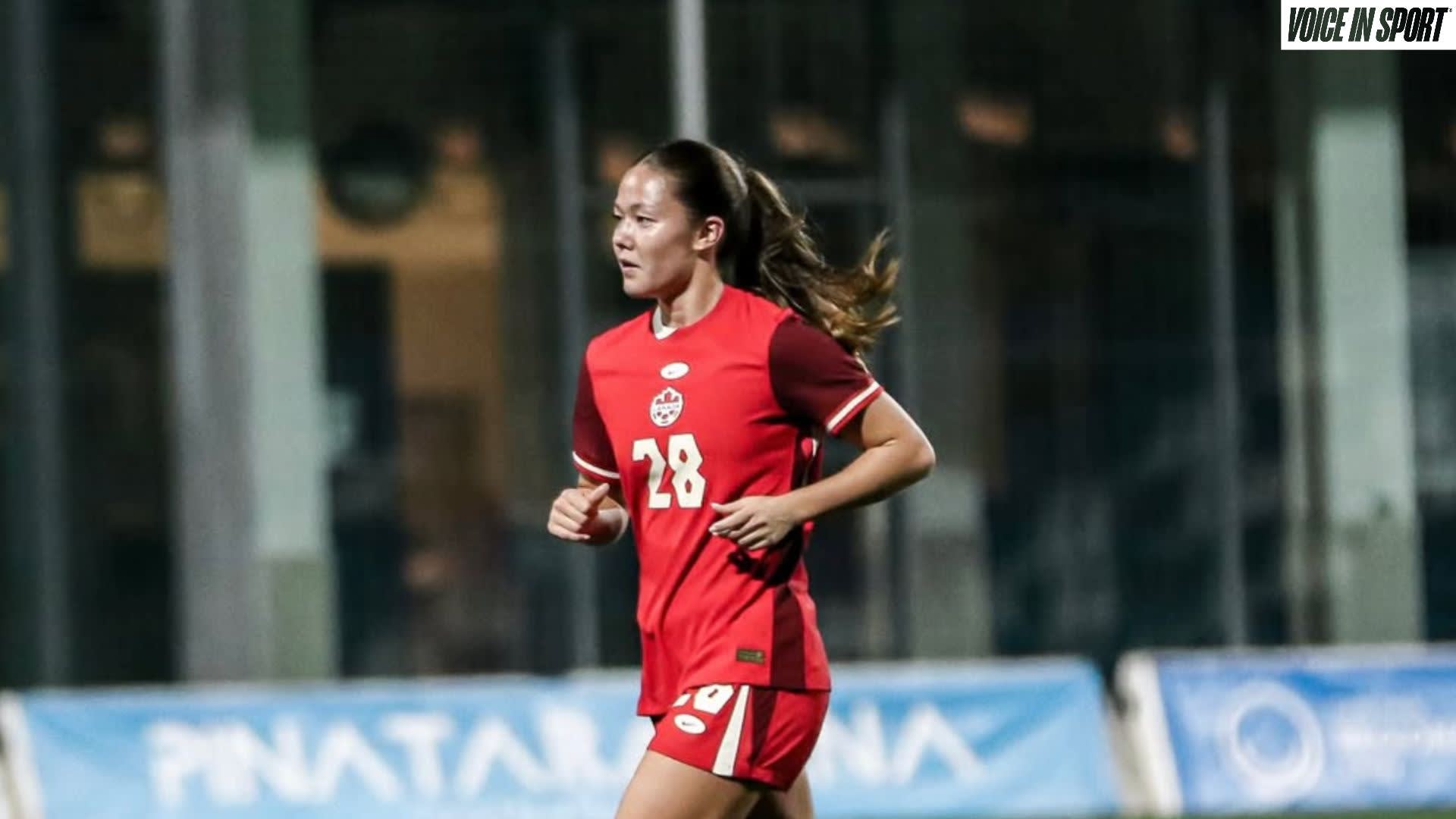
For Samantha Chang, an ACL injury is not an unfamiliar story. The AFC Toronto midfielder knows the frustrations of watching from the sidelines, the monotony of rehab and the feeling of wondering when she will finally get to do the thing she loves again.
Chang tore her first ACL in 2018. After spending a year away from competition, she eventually made her way back to the Canadian youth national team, where she captained Canada against the United States at the 2020 CONCACAF U20 tournament. Years later, she would go on to make history as captain of Vancouver Rise FC, helping the team secure the inaugural Northern Super League championship.
In January 2026, Chang returned home to sign with AFC Toronto, a move she described as incredibly meaningful after spending time playing abroad and across Canada.
Unfortunately, in March, before she could make her competitive debut for her hometown club, Chang tore her other ACL.
The timing was brutal. She had just finished a season that included a historic championship. Chang felt like she was building momentum in her career and was finally presented with the opportunity to represent her hometown. Suddenly, she was back in rehab.
But this recovery felt different. Chang entered it with a completely different understanding of herself.
Initial Feelings
The first time Chang tore her ACL, she didn’t know what was waiting for her on the other side of surgery. She only knew that she had been taken away from competition for a full year.
That experience ended up being a learning experience. Change learned that could endure something incredibly difficult and come out the other side.
“My first ACL recovery showed me that I am able to overcome such a long and grueling rehab process,” Chang says. “When I finally got a chance to play again, I felt that above everything else, I proved to myself that with the right amount of dedication and hard work I could achieve whatever I set my mind to.”
Her first comeback was not defined by the championship she would eventually win with Vancouver. Instead, Chang points back to a much earlier moment: returning to the Canadian U20 team in 2020 after being cut from the previous cycle, something that happened just months before her ACL tear.
Not only did Chang make it back, but she was also trusted with the captain’s armband against the United States.
“That moment for me was everything,” she says. “It really showed me that I had not only returned to my previous level but was able to represent Canada at the U20 level.”
That was the proof she needed.
“My first ACL recovery showed me that I am able to overcome such a long and grueling rehab process. When I finally got a chance to play again, I felt that above everything else, I proved to myself that with the right amount of dedication and hard work I could achieve whatever I set my mind to.”
Chang's Road to Recovery
Her second ACL injury came with something Chang didn’t have the first time: experience.
She already knew what the initial shock would feel like, knew what preparing for surgery would involve and had a better idea of what the first stages of rehab would demand from her.
In some ways, that knowledge made the beginning easier.
“Just knowing I had overcome it once before brought me a sense of calm,” she says.
But knowing the process doesn't mean you can predict it.
As Chang moved deeper into rehab, she began experiencing different challenges from the ones she remembered from her first recovery. That uncertainty was difficult, particularly because people around her said the second recovery would be easier.
“No two knees are the same,” she says. “A lot of people told me the second time was way easier, so when I ran into some different flare ups than last time, it threw me off mentally.”
Her physio has jokingly referred to her first recovery as “youthful ignorance.” Back then, Chang could throw herself into the process without knowing how complicated it could become.
Now she knows better. This time, she has had to slow down, listen to her body and give herself grace.
“No two knees are the same. A lot of people told me the second time was way easier, so when I ran into some different flare ups than last time, it threw me off mentally.”
Building Strength
There is a physical side to ACL rehab that is impossible to avoid. There are exercises to complete, strength to rebuild and milestones to reach.
But Chang knows the mental side can be just as demanding.
During her first ACL recovery, she experienced depression. So when it happened again, she didn’t want to wait until she was struggling to ask for help. Chang made sure she had a therapist available to support her if those feelings returned.
She also made a deliberate effort to make space for life outside of soccer.
This summer was Chang’s first time living downtown in Toronto and being back home full time since high school. She spent time with family and friends, while her partner stayed with her for the first couple of months when she was still limited physically.
Sometimes, recovery looked less like an elite athlete’s training plan and more like sitting down to play Fortnite. Those moments were important, too.
Chang had already learned that being injured can make soccer feel like it is taking up every part of your life. This time, she wanted to make sure it didn’t.
Back in Action
Now Chang is rehabbing as a new player at AFC Toronto. She arrived at the club excited to build relationships and compete for her hometown at BMO Field. Instead, she had to watch from the sidelines.
“Coming into the team as a new signee and getting hurt before I got to develop on field relationships has been interesting,” Chang says. “There is so much bonding that I don’t get because I am not playing or traveling with the team.”
Being unable to play has not meant being unable to lead.
Chang watches games from a different vantage point and uses that perspective to support her teammates, particularly the other midfielders. She asks questions and offers encouragement.
“I try and contribute where I can,” she says. “It's obviously a very supportive role but I do have a birds eye view of the games so I feel like I can offer a different perspective.”
Chang has spent much of her career leading from the middle of the field and now she’s learning to lead from the sidelines.
Return to Play
For now, Chang isn’t fixated on the first tackle or the first full 90 minutes. When she imagines returning, she pictures something much simpler.
The AFC Toronto jersey.
“Wearing the kit on media day this year hurt more than I expected it to,” she says.
Chang is waiting for the day when she can finally put it on and walk onto the pitch beside her teammates, feeling strong, fit and ready to compete.
After everything that has happened, the goal isn't complicated.
“Just to be back doing what I love most,” she says. “Simply just playing and competing.”
Beyond the Comeback
Chang’s career has already given her both sides of the athlete experience.
She knows what it’s like to fight through a long rehab. She also knows what it's like to finally return to play, wear the captain’s armband and lift a championship trophy.
Her experience with Vancouver Rise showed her the power of a team.
“Winning a championship showed me how a strong sense of collective can overcome any adversity,” she says.
Now, being injured has shown her another side of leadership: empathy.
“Going through a long term injury highlights the importance of empathy as a leader,” Chang says. “Experiencing [the] hardship first hand is something not everyone understands.”
The injury has also changed how she thinks about what it means to contribute. She cannot influence a match with a tackle, pass or goal at the moment, but she can still be present for the people around her.
That may be one of the biggest lessons of this recovery. Leadership does not disappear when you leave the field. Sometimes, it simply looks different.
“Going through a long term injury highlights the importance of empathy as a leader. Experiencing [the] hardship first hand is something not everyone understands.”
Not a Setback
Going from winning a championship to tearing an ACL only a few months later was not something Chang could have planned for.
“I felt like I was building momentum in my career just for it to come to a screeching halt,” she says.
It would be easy to look at the second injury as another setback. Chang sees it differently. She doesn't believe her opportunity with AFC Toronto has disappeared. It has simply been delayed.
“I don’t feel like that chapter is being taken away,” she says. “I feel like it has been put on hold.”
There is a quote she has returned to: “What is delayed is not denied.”
She knows this recovery will take time. She knows there will be difficult days and moments when the process feels impossible. But she also knows something her younger self didn't. She knows she can get through it.
“The process is long, yes it sucks, and yes it can feel impossible both physically and mentally at times,” Chang says. “But there's exercises to do and my knee isn't going to get better on its own.”
So she keeps showing up. Not because she knows exactly when the comeback will end, but because she knows what happens when she takes the process one step at a time.
“I’ll look back and be proud to have overcome this injury once again,” she says.
