 X (Twitter)



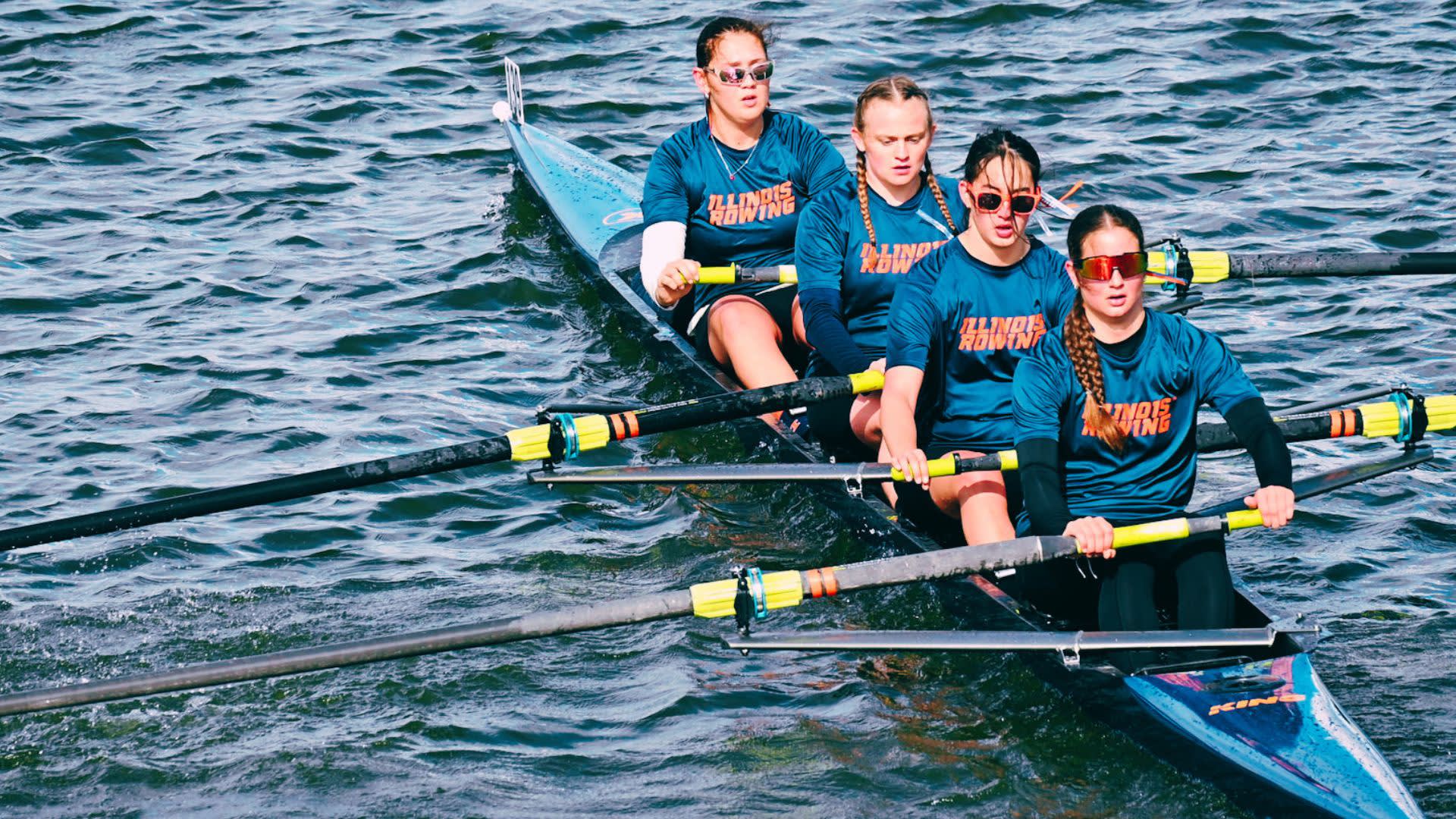
Meet Illinois Rowing
Picture this: it’s 4:30am and you just drove 45 minutes to get to practice. Through groggy eyes and chilled morning air, you see a beautiful sunrise over the lake alongside teammates that you call family.
This is what Sylvia Gimbel has taken from her time as a rower on the club rowing team at the University of Illinois.
The Illini women’s rowing team is made up of 16 varsity rowers and 13 novice rowers. At Illinois, rowing is a club sport, meaning they don’t have the funding that NCAA-sponsored sports have. But that doesn’t mean they aren’t competitive, dedicated, and driven.
As a club sport, Illinois rowing funds their team by charging members dues. This presents a large challenge for the recruitment and retention of rowers on their team. And Illinois isn’t alone in this struggle. Many rowing teams across the country are struggling when it comes to funding.
We talked to the women of Illinois’ rowing team about rowing, funding, and bringing VISibility to the sport.
Illinois Rowing’s Story
If there is one thing to take away from the Illini Rowing team, it’s that community is at its center. Belonging, friendship, gratitude, accountability, and hard work are core aspects of this team.
Abigail Daniele, women’s team secretary and varsity coxswain, shares that at Illinois, “you join because you love rowing, you stay because you love the people.”
Even younger athletes have recognized the value that community brings to this team. “My team has become my family within just a year of rowing, and it is something I wouldn’t change for the world,” Isabel Christy, sophomore varsity rower, adds.
These shared values set Illinois apart. “There’s a saying in the club rowing community that nobody wants it more than Illinois, and it holds a lot of merit,” Daniele says.
“My team has become my family within just a year of rowing, and it is something I wouldn’t change for the world.”
Barriers to VISibility
Rowing is a challenging sport. But it’s not considered mainstream here in the states.
With a lack of coverage in sports media, smaller presence in professional and collegiate sports spaces, and low overall funding, rowing faces a lot of adversity.
Rowing is also expensive. “From a financial aspect, equipment prices, entry fees, and club dues are all quite costly. For example, a Cox Box is a relatively small piece of equipment, but proves essential for the function of racing sweep crews. If we were to buy one today, it would be $729. Although an already large number, a Cox Box becomes a small purchase comparatively when looking at the price points of equipment such as boats, oars, trailers, and a truck,” said Daniele, a junior on the team.
But the challenges in rowing aren’t just financial—they’re in the media, too. Women’s rowing in particular lacks coverage from major news outlets. With most television slots going to high revenue generating NCAA sports like basketball and football, there’s little room for collegiate club sports like rowing.
Increasing VISibility
Support for rowing starts with VISibility. With increased attention, more athletes can find the sport and help build a bigger community.
But what would this increased VISibility look like? The Illinois women have some ideas.
Junior Women’s Team Captain and varsity rower Ananya Mani said that sports fans can watch 2k races and big regattas or follow rowers on social media to build the community.
Junior Fundraising Chair and varsity rower Katherine Altergott says that building VISibility lies in growing participation. “Society as a whole should encourage people to participate in rowing, just like any other sport, and it should not be done on the basis of gender. Rowing should be for everyone: growth should be encouraged, and successes should be celebrated,” says Altergott.
And freshmen rower Lucy Heikes said that sharing stories of dedication, teamwork, and discipline helps bring more light to the sport. “We can use social media, engage more with the campus and local community, and highlight the personal success and journeys of athletes. By showing our heart and effort, we can help others appreciate their value,” she says.
“Rowing should be for everyone: growth should be encouraged, and successes should be celebrated.”
What the Future Holds for Rowing
Teams like Illinois are the perfect role models to look to in order to find solutions to increase participation in and support for rowing and other non-revenue sports.
VISibility starts at the local level, but there is still more room to expand in the larger space as well. With increased coverage of women’s rowing on social media and popular sports channels, there is hope that the NCAA and other funded athletic spheres can welcome more teams.
Rowing as a sport has something special. “Participating in rowing is not convenient. There's lots of equipment, the weather has to cooperate, every single person in your boat has to show up. What this means is that the people who stay do so because they truly love the sport. We love being on the water, outside in the fresh air, each morning before the sun is even up. We love the challenge of waking up and having to complete a tough workout that pushes us to our limits,” says Altergott. But the fact that participation is difficult doesn’t mean it’s not worth it. For many rowers, the difficulty of the sport is what makes it meaningful.
Help us bring VISibility to rowing and other non-revenue sports by listening to their stories and going out to support. It takes something special to be a rower.
In collaboration with teams like Illini Rowing, we can help cultivate VISibility and opportunities for rowing so more young women have the chance to pursue it.


