 X (Twitter)


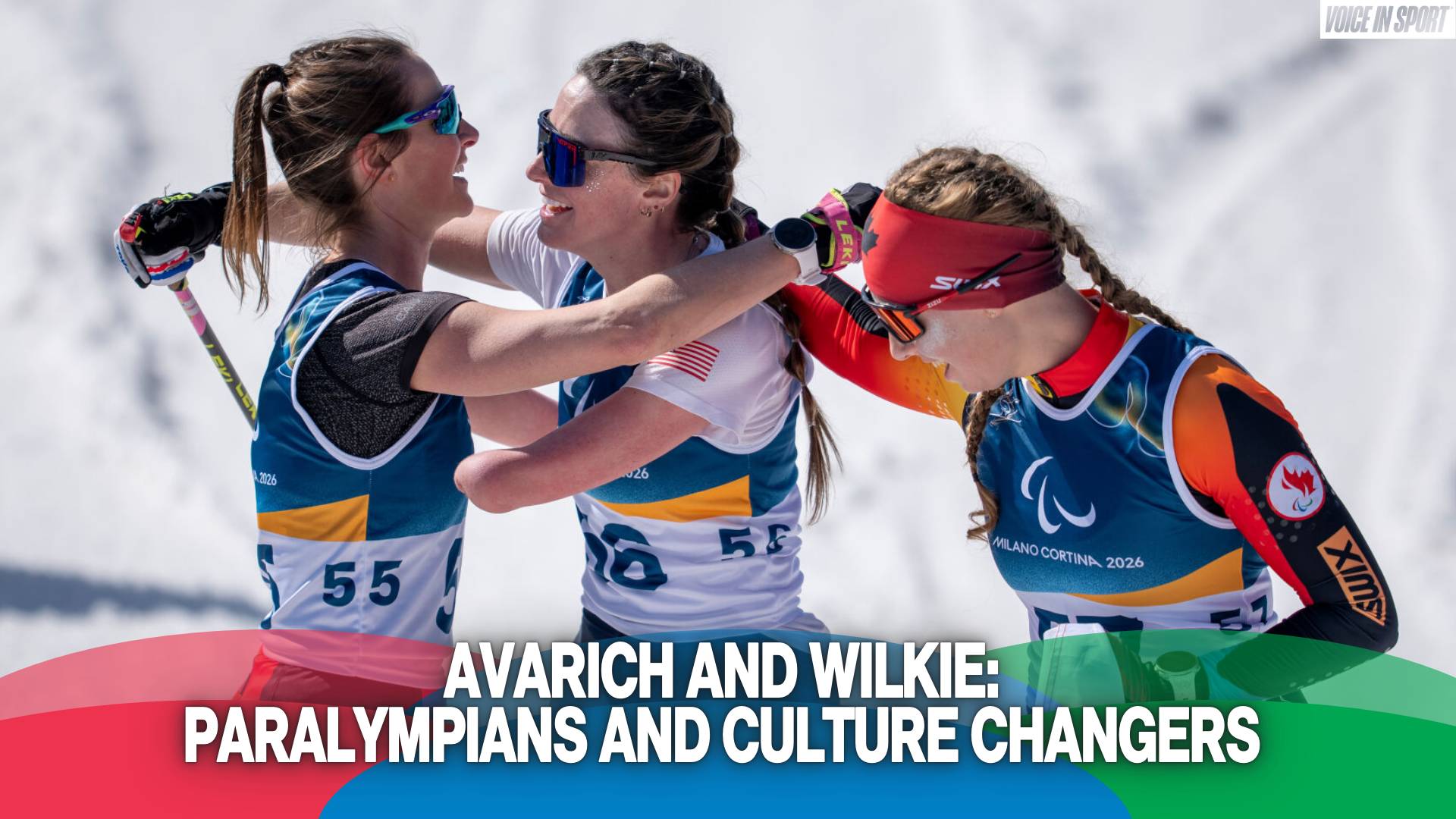
The final event in para biathlon standing, the women’s sprint pursuit, was held on March 13 in Milano Cortina. And while every biathlete was looking to close their Paralympics with gold around their neck, it was 25-year-old Canadian Natalie Wilkie who hit her target, completing the event in 12 minutes and 18 seconds.
While Wilkie was amongst the favorites going into the race—having come in 3rd place during the qualifiers run early that day—Team USA’s Danielle “Dani” Aravich’s Paralympic games did not go as expected. After securing the last qualifying spot, the 29-year-old chose not to participate in the final run.
But even though Wilkie's and Aravich’s results in this final are the opposite of one another, the work they’re doing in the public sphere to make the para community be seen and valued is quite similar.
Changing The Culture
Dani Aravich is no stranger to the way society portrays the disabled community. Having participated in both the Winter Paralympics as a para biathlete and a para cross-country skier and the Summer Paralympics as a 47T 400-meter runner, she witnessed firsthand the discrepancies in coverage between the Olympics and Paralympics.
“People with disabilities are so often told to be quiet or shoved aside,” said Aravich in an interview ahead of the 2026 Paralympics. That’s why she, alongside three other Paralympians, used her experiences to launch Culxtured, a media company that aims to elevate the voices of para athletes' voices and presence in the media.
Founding Culxtured, whose vision is to “envision a world where disabled sports are as recognized and celebrated as any other, where athletes are honored not just for their abilities but for what they do beyond the field of play,” allows Aravich to create the change she wishes to see in the broader media.
But creating this company is only one of the ways Aravich uses her influence in the sporting world to increase the voices of para athletes in the media. She also worked on the US Olympic and Paralympic Committee's digital media department during the 2024 Games and was a member of the committee working on the bid to bring the Olympic and Paralympic Games to Utah in 2034.
“I didn’t want to be seen as different or disabled.”
Speaking Through Performances
Just like Aravich, Natalie Wilkie advocates for the recognition of Paralympians through direct work regarding the Olympics and Paralympics. Ahead of this year’s Paralympic Games, she worked with Lululemon to create inclusive and adaptive pieces of clothing for Canadian athletes.
She also helped bring attention to the disabled community through her performances in Milano-Cortina. So far, Wilkie, who competes both in para biathlon and para cross-country skiing, has won four medals—two in biathlon and two in cross-country skiing—bringing her Paralympics medal collection to 11. Her successes not only showcase that Paralympians have the same level of skills as Olympians, but they also push the Canadian media to expand their coverage of her as an athlete and, ultimately, of the Paralympics as a whole.
Wilkie, who was named the opening ceremony flag-bearer for Canada, also impacts the disabled community in her daily life by speaking openly about her struggles in the media: “I didn’t want to be seen as different or disabled,” Wilkie said in an interview conducted by CBC.
She added in that same interview that the Paralympic Games helped her find a community, which “made me realize how many doors had opened for me because of Para sport.” A successful athlete like Wilkie being open to discussing the positive impact of the Paralympics on her life helps raise awareness on the importance of celebrating and valuing the Paralympics and the athletes participating in them.
From competing on the para biathlon trails to advocating for the recognition of the disabled community, Dani Aravich and Natalie Wilkie have been two role models to follow in Milano Cortina.
One way to support Paralympians is to consume content! So tune in to the 2028 Paralympics to watch strong women like Aravich and Wilkie compete.
