 X (Twitter)



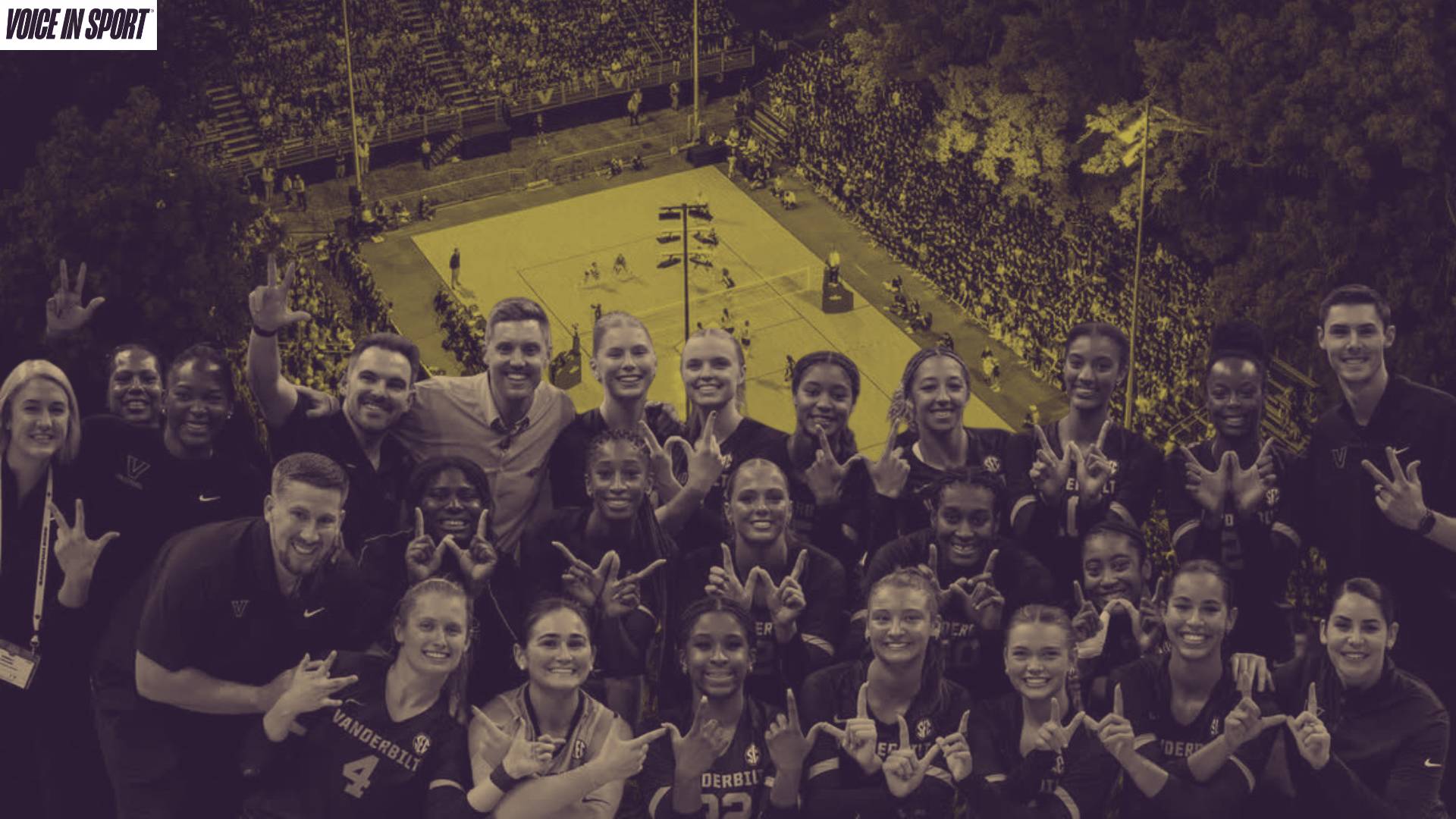
In its SEC Tournament debut, Vanderbilt Volleyball delivered the storyline no one saw coming. The 15-seed Commodores upset No. 10 Mississippi State on November 21 and stunned No. 7 Georgia on November 22, advancing to a quarterfinal matchup with No. 2 Texas A&M. Vanderbilt’s run ended there, but the two early-round wins were the clearest sign yet of what’s taking shape in a program rebuilt from scratch.
“We’ve talked all year about what team one’s legacy was going to be—we’re the very first team in program history, so what are we going to be remembered for?” head coach Anders Nelson said. “And now we know. It’s this tournament and this run. We’re just so proud of this team and how we played this week. This is the legacy we created.”
The tournament run capped a season more than three years in the making: Vanderbilt officially announced in 2022 that it would relaunch its varsity volleyball program, giving the staff a 36-month runway to rebuild a team that had been dormant for 45 years.
From the outset, Nelson set the tone with a simple challenge: “Why be next when you can be first?” But being first meant shouldering the hardest parts of a true rebuild—absorbing the losses, embracing the learning curve, and laying a foundation sturdy enough to support everything still ahead.
The Rebuild
Rebuilding a college volleyball program is easy to romanticize until you’re the one living the losses. Vanderbilt knew that launching an SEC volleyball team after a 45-year absence wouldn’t come with instant gratification. Wins would be sparse, the record would look unforgiving, and every week would expose gaps that only time, training, and recruiting could fix.
But that’s what building from scratch actually is: uncomfortable, uneven, and often invisible to anyone who isn’t inside the gym.
“If you just consume yourself with wins and losses, it’s an emotional rollercoaster and it’s very difficult to be consistent for those around you,” Nelson said. “If you find a bigger purpose it makes it easier to embrace the grind every year; mine is definitely getting athletes to reach their potential, and that’s why I was so drawn to this job.”
In year one, the Commodores focused less on chasing results and more on constructing the bones of a program—installing a defensive system, defining a culture, setting expectations for strength and conditioning, and teaching players what SEC speed actually feels like. Nelson and his staff spent as much time teaching habits as they did running drills. Every practice was more about foundation than flourish.
“For somebody who has been a part of it since the beginning, it still took my breath away when I first saw them in Memorial [Gymnasium],” Vanderbilt Athletic Director Candice Storey Lee said. “It’s an incredible environment, and I’m so proud of the young women on that team as they’re competing. It’s so hard to start something; it’s one of the things that people take for granted. It’s hard to start something from scratch or bring it back after being dormant for four-plus decades.”
The scoreboard didn’t always show the effort—Vanderbilt finished the regular season at 7–17 and 3–12 in the SEC—but the progress did. They built durable habits, established their identity, and created standards that will carry into next season.
The Vanderbilt community is starting to feel it too: 4,960 fans filled Memorial Gymnasium for their last home game of the season, a sign that the foundation these players are building is beginning to resonate.
“We’re just so proud of this team and how we played this week. This is the legacy we created.”
The First Commits
Every rebuild has a moment when someone says “yes” before anything is proven. For Vanderbilt Volleyball, those early commits were that moment. The first was now-sophomore libero Hailee Mack, who chose Vanderbilt when the program consisted of just two staff members: Nelson and defensive coordinator Russell Corbelli.
“It’s definitely hard to play [at a] high-level and also get high-level academics,” Mack said. “Vanderbilt is in the SEC, so you’re playing those really high-level teams, but also, you’re getting a good degree at the same time.”
Soon after came the next pieces, including graduate transfer Isabella Bareford and redshirt senior Jackie Moore. But this group wasn’t immediately ushered into competition. Vanderbilt Volleyball decided to redshirt 10 players during the 2024–25 season because the program wasn’t set to launch. For the athletes, the pause was an opportunity to get stronger in the weight room, adjust to Vanderbilt’s academic rigor and build community.
“I think [redshirting] was a really cool opportunity,” Moore said. “We got to just train together and form core relationships when it was just a few of us at first. Then, we slowly grew over time. We got to just work out the kinks of things. We [also] got to focus a little bit more on school and the other elements of [college], like going to football games every weekend and having more free time.”
These players were creating a legacy, stepping into a program with no banners, no traditions, and no history to lean on. Coach Nelson was honest from the start, laying out just how hard the rebuild would be; some recruits stared back uncertainly, but every so often, he’d catch a smirk from someone who liked the sound of a challenge. Those were the athletes he gravitated toward—the ones with the courage to get uncomfortable and do hard things.
“I think it’s very different from my old school. We are establishing a culture, which is so different because we didn’t have a team,” Bareford said. “We want to outwork every team that we play. We aren’t gonna be as physical, but we want to outwork every team. I think that’s something that we’re all really buying into.”
“We have really lofty goals for our program, just within year one. And so, if we’re trying to be a force to be reckoned with, not only within the SEC but with volleyball nationally and in [the] NCAA, we want to be a team that can win a national championship”
The Future
The SEC Tournament became the payoff for months of struggle, recalibration, and belief. After a season spent learning who they were and how they wanted to play, Vanderbilt’s two upset wins felt like the purest expression of their growth.
“There was a point this season where we were sitting at 1–11 in conference play, and it was rough,” Nelson said. “But from that moment on, we played about .500 volleyball, and we made a conscious decision as a group to act differently, play differently, and be completely consumed by the process. And what it got us was one of the most special weeks this team has had together.”
But inside the program, no one sees the SEC tournament wins as the finish line. Nelson’s vision is clear: he wants his inaugural recruiting class to reach the NCAA Tournament before they graduate
“We have really lofty goals for our program, just within year one. And so, if we’re trying to be a force to be reckoned with, not only within the SEC but with volleyball nationally and in [the] NCAA, we want to be a team that can win a national championship,” Volleyball Director of Operations Kimberly Williams said. “That is not something that we just say lightly. We’re here to compete, and we’re here to take this program all the way to the top.”
If year one was about survival and identity, the next chapters are about refinement and growth. With the hardest part behind them—the part with no history, no rhythm, and no competitive base—the program finally has something to build on.
The record might not show it yet, but the rebuild is real—and the future is already taking shape.
