 X (Twitter)




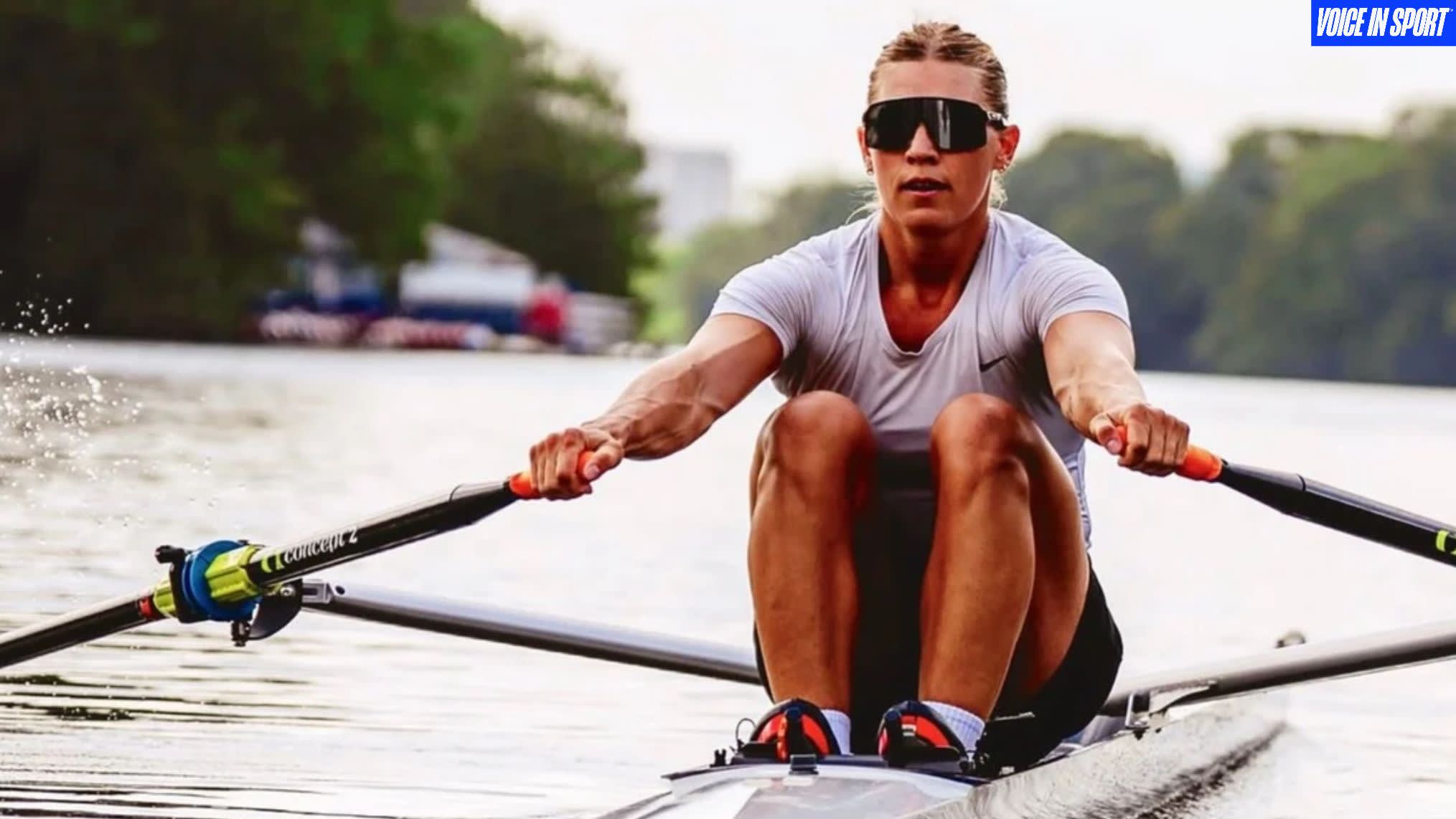
Boston’s Charles River drew more than 12,000 competitors from around the world to the 2026 Head of the Charles Regatta, held October 16 to 18, 2026.
The three days of racing were filled with exciting competition after competition, and too many fast boats to count. One of the weekend's most anticipated races was the Women’s Championship Eights, where the United States National Team entered two crews, full of elite national team and Olympic athletes, and placed first and second. The University of Virginia placed third. In the collegiate-specific division, Tufts University captured the Collegiate Eight title for the fourth consecutive year.
The weekend also featured races for youth rowing clubs and master-level athletes. Among them was a Women’s Veteran Eights crew from Marin, California, that made history as the first-ever octogenarian (between 80 and 89 years old) all-women’s eights crew to row at Head of the Charles. Many of the women started the sport later in life, around age 50, after growing up before Title IX, when women had no opportunities to row in college.
“We are all pre-Title IX women. So, we are trying to inspire and empower all women," said Kim Coggan.
Women’s rowing debuted at the Montréal 1976 Olympic Games, 80 years after men's rowing. Its inclusion led national programs to fund and support more opportunities for women. Title IX passed in 1973, preventing sex-based discrimination in any education program or activity receiving federal financial assistance. In the years following, NCAA women rowers in Divisions I, II, and III increased from 1,187 in 1981-82 to 6,939 in 2024-25, nearly six times the number.
Today, women athletes are introducing rowing to new audiences through social media. VIS spoke with four collegiate and elite rowers about making the sport more VISible.
Sera Moon Busse, a U.S. National Team member and World Rowing Beach Sprints silver medalist, says social media offers people an entry point to a sport they might not otherwise encounter.
“Every viral video acts as an entry point, which has the opportunity to spark questions and curiosity while introducing the sport to entirely new audiences,” Busse told VIS via Instagram.
“Every viral video acts as an entry point, which has the opportunity to spark questions and curiosity while introducing the sport to entirely new audiences.”
That introduction can make rowing feel more accessible. Erin Kirby, a University of Texas at Austin collegiate rower and NCAA champion, hopes her content reaches people inside and outside the sport.
“I hope my platform can make a sport that can seem very intimidating and unfamiliar more relatable and accessible to everyone, whether they are a rower or not,” she told VIS via Instagram.
Busse also wants to challenge the idea that athletes have one particular look.
“Specifically [I want to show] what a strong body can look like and do for you when you FUEL it well, what an athletic journey can look like when you commit to consistency and enjoy the journey, and how a positive mindset can help you be successful in life and in sport,” she said.
Alexa McAuliffe, a Texas rowing alum turned head coach and national and world champion, has made it a goal to share the process, not just the results on her platform.
“I’ve noticed that when you share more of the process, people become invested in more than just the outcome,” she told VIS via email. “They start to understand the sacrifices, the setbacks, the relationships, and the personalities that make up the sport. That connection is incredibly powerful, especially for women’s sports, where athletes haven’t always had the same visibility or opportunities to tell their own stories.”
Greater visibility is so powerful in helping keep girls in sports.
“I love that social media is showing young girls what they can accomplish if they stay in sports,” Busse said.
McAuliffe agrees: “If sharing my experience can make someone more curious about rowing, help a young athlete feel like they belong in the sport, or encourage someone to pursue something that feels intimidating, then I think that’s a meaningful use of my platform. I want to show the reality of chasing something difficult, not just the polished moments at the end,” she said.
“If sharing my experience can make someone more curious about rowing, help a young athlete feel like they belong in the sport, or encourage someone to pursue something that feels intimidating, then I think that’s a meaningful use of my platform. I want to show the reality of chasing something difficult, not just the polished moments at the end. ”
It is not just about sharing the highs of the process, like the good practices and workouts. Being transparent on social media helps athletes connect more with their audience and remember that what they see elite athletes doing is possible for them.
“I think it's really important to share the highs and the lows because a lot of people see me or see Olympians, for example, at a very high level, thinking that they're unachievable, that's unachievable, almost putting us on a pedestal,” said Célia Dupré, Swiss Olympian and collegiate rower at Stanford, to VIS via Instagram. “But then here I am having achieved it, and I don't actually think that there's that much more to it than believing in yourself.”
Sharing online also requires boundaries. To do this, Kirby focuses on prioritizing her well-being, performance, and education: “Learning to step back and take a break when needed is also important, she said. “Social media should come second; protecting my peace, performance, and education always comes first.”
“I don’t want documenting my life to take away from actually living it,” McAuliffe said.
