 X (Twitter)



Comparison shows up before anyone is watching.
Before the championships. Before Team USA. Before anyone calls you elite. It shows up in the gym in high school, or middle school, when you measure yourself against the girl next to you who just got a Division I offer.
Ariel Atkins knows that feeling. She’s a WNBA champion and Olympic gold medalist now, but she didn’t get there with unshakeable confidence from day one. She got there by learning how to stop letting comparison define her.
When Comparison Gets Loud
In high school, the noise was constant. People focused on rankings, on who was improving faster or who looked more ready. During this time, there were stretches where Ariel just didn’t feel good enough, and not in a vague, abstract way. She wondered if she was behind and if everyone else had figured something out that she hadn’t.
Comparison isn’t always harmful. It can make you better by pushing you when you start to get comfortable. But the moment it becomes how you measure your worth, it turns on you.
Ariel had to learn what we all learn eventually: that she couldn’t control what anyone else was doing. She could control how hard she worked, how she responded to feedback, and how she showed up every single day. By focusing on what she could control, she gave herself direction through her doubt.
Confidence Takes Time
“It took years to get where I am today” Atkins told VIS.
When we watch athletes like Ariel, we often see the finished version of them, victorious. We don’t see what built that success, like the losses and seasons that felt more like progress backward than progress forward.
Ariel had to grow her confidence over time. It wasn’t immediate. It needed good days, bad days, and even boring days, to become something she could tap into during competition.
For many of us, we want building confidence to feel like flipping a switch. But even for elite athletes like Ariel, it doesn’t work like that. And once you build confidence, you still have to work to maintain it, every single day. Like any other muscle in our bodies, confidence is something we can hone and build over time with repetition and dedication
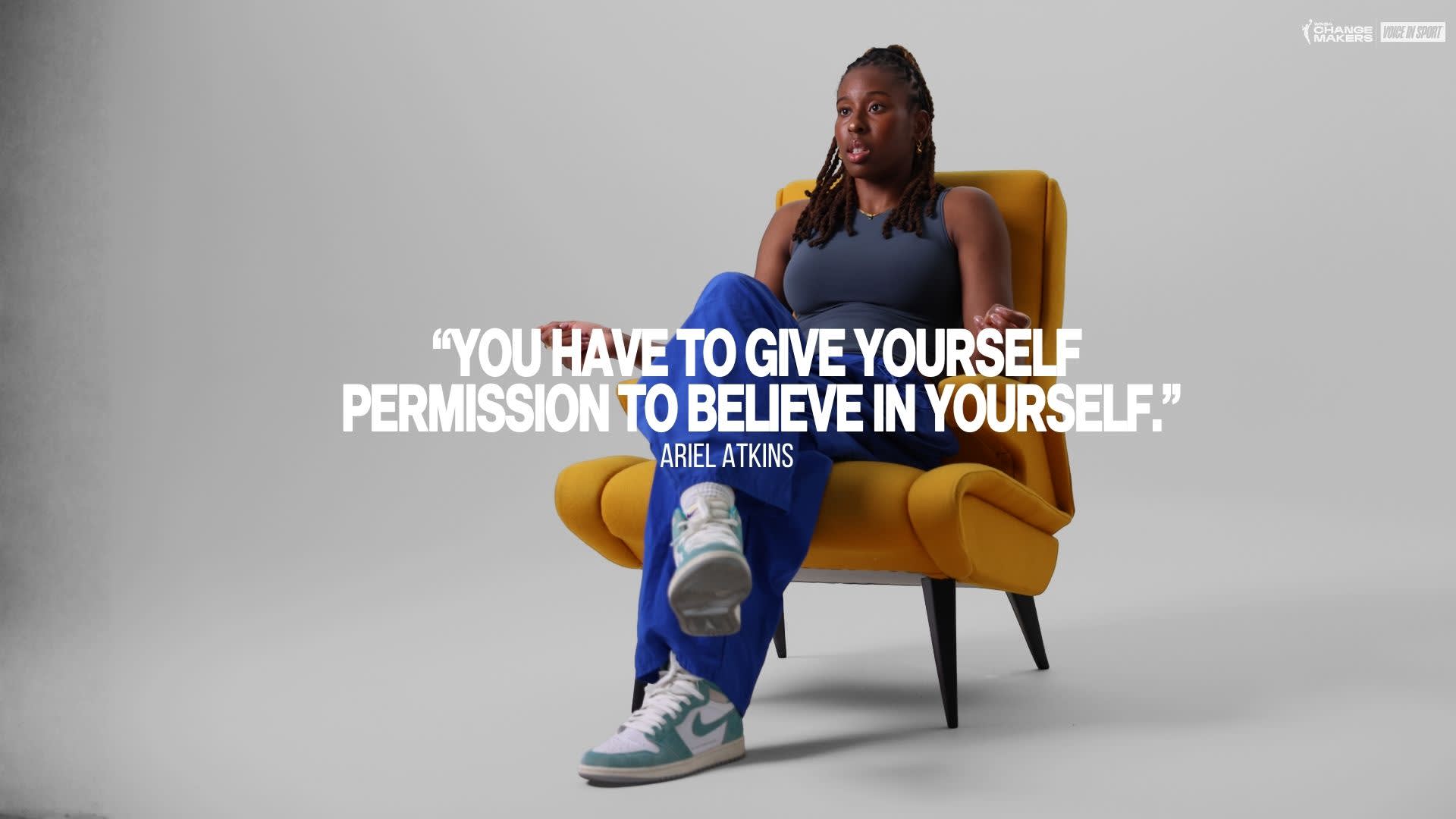
“You have to give yourself permission to believe in yourself.”
The College Shift
When Ariel got to college to play Division I basketball at the University of Texas, the competition was tougher and the expectations were higher. Once again, she had to turn inward and focus on honing her confidence.
Somewhere in the middle of that pressure, she realized waiting to “feel ready” wasn’t working. She stopped waiting to feel ready and started deciding she already was.
"I almost had no choice. I started thinking ‘I am pro,’" she said.
Ariel learned that she had to choose to see herself as the athlete she wanted to be before she had the résumé to prove it. By believing in this future, Ariel was manifesting her dreams and backing them up with the confidence she built.
Giving Yourself Permission
“You have to give yourself permission to believe in yourself,” Ariel said. Belief and confidence start with you, not your coach, your parents, or the fans.
So many of us spend years waiting for someone else to confirm that we’re good enough. But we shouldn’t leave that decision to someone else. We should build our own foundation of confidence and belief, one positive thought or one lofty goal set at a time.
There's a version of comparison that helps us grow, but comparison can also convince us that we’re falling behind.
If we are constantly measuring our journeys against someone else's timeline, we lose sight of our own. A teammate’s or even a rival’s breakthrough doesn’t mean that we’re late to ours. Our moment will come, we just have to be patient and keep building toward it.
Ariel was clear in saying that growth takes years of unglamorous, repetitive work that most people never see.
The Takeaway
If comparison feels heavy, you are not alone. If confidence doesn’t feel natural yet, that doesn’t mean it never will.
We can build our confidence through small, daily choices like showing up when we feel tired and focusing on the process instead of our peers’ progress.


